
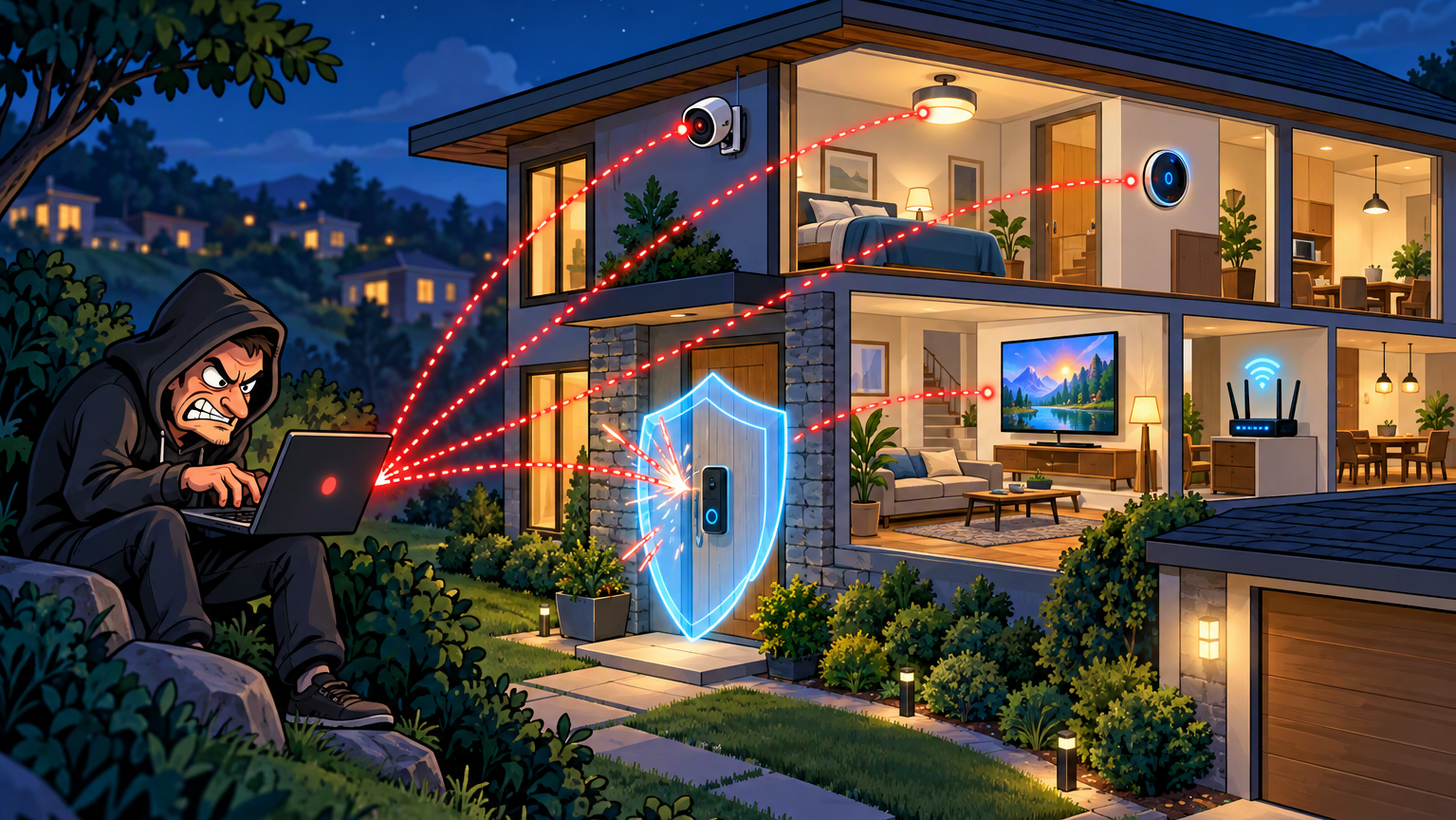
The last few weeks have not been great for the tech market. Putting aside stories of AI and spies, we have seen a major Microsoft outage that virtually grounded most of the world, an actual grounding of US planes due to a telecom issue and European supermarkets having their smart fridges hacked, turning chilled food into semi-cooked and fully-ruined produce. Yesterday Chase Bank suffered an outage due to a software bug… and before that, of course, Binance lost a small fortune to a hack.
It’s almost enough to make you wonder if this connectivity thing has gone too far…or not far enough in the case of the air traffic control system that appears to be hanging on by a copper thread or two. But let’s not think about the planes and look instead to a more mundane, domestic issue with the smart home.
To be sure, today’s smart fridge is a far cry from the industrial complex that makes up supermarket freezers, but the hacking certainly makes one wonder if buying a smart fridge for one’s home has more risks than reward. Could state-run hackers – or some teenage kid in the next street – turn your own frozen food into warm mush? More to the point, whether they actually can, or cannot, is somewhat irrelevant: if the potential consumer thinks it is a risk, then why would they buy a smart fridge?
Manufacturers will need to respond with details of how their brand is more secure than the one next door (or in a supermarket) but the source of the hack is often outside the control of said manufacturer. Perhaps the consumer has been ignoring those annoying “update the app now” requests, leaving their security out of date. Or perhaps the smart fridge isn’t the source of the leak, but instead it is one of myriad of other smart devices in the home… or even the router itself. A 2025 FBI report stated than any router dated 2010 or older was an inherent risk point as it was unlikely to be receiving security updates.
But regardless of where the leak potential is, the ongoing news about hacks and system failures could create a significant push back on less necessary technology such as smart home devices. Do I need my curtains to open on a Siri command? Do I trust the company that makes said curtain opener? Indeed, it’s not just the smart home – that’s just the most topical based on the recent fridge hack. How about your wearable data, perhaps, which is becoming more and more personal as the devices increase in their sophistication.
The situation is going to get worse before (hopefully) it gets better. Hot and cold wars are broadening beyond symmetric bomb-dropping into a more sophisticated multipronged assaults that rely on hacking systems as much as anything else and AI is making this warfare easier. Forget using AI to help you with schoolwork: its darker side is an arms race between the hackers using it to enable more sophisticated hacks and companies using it to discover the security gaps first.
What manufacturers should not do is hope that consumers keep things up to date. Rather, there needs to be a more active push of security updates for all types of devices and, perhaps, a security rating grading for companies and their devices so that consumers can consider the risk versus reward of buying a cheap, or pricy, smart fridge, router and so on.
In the meantime, while I’m not ready to take my money out of the bank and stuff it under my mattress, I will be changing a few passwords so no one can hack my curtains (or at least not so easily).