
Comcast Breaks Apart Empire to Refocus on Connectivity and Streaming Competition
Comcast announced plans to separate its media and entertainment assets—including NBCUniversal and Sky—from its core connectivity business, creating two independently traded public companies. The move reflects a fundamental reassessment of the traditional vertically integrated model amid ongoing disruption from streaming and digital platforms. The standalone media entity will house Peacock, Universal Studios, broadcast networks, and global assets, while the remaining Comcast will focus on broadband, wireless, and distribution.
The Circana Take:
- Comcast’s move underscores the company’s continued shift away from vertical integration, as for Comcast assets success appears increasingly depends on flexibility, partnerships, and platform-agnostic distribution. This is quite the divergent strategy of Disney and Skydance.
- Both entities gain strategic clarity—connectivity can prioritize infrastructure and bundling, while NBCU can double down on streaming profitability, content monetization, and global expansion.
Netflix Leans into Bite-Sized Video with Publisher Partnerships
Netflix is taking a step into short-form video through new partnerships with media publishers including Variety. The initiative introduces professionally produced, shorter clips into the platform, reflecting a strategic effort to capture incremental engagement and remain relevant in a marketplace increasingly dominated by social video formats. Rather than building a fully open creator ecosystem, Netflix is opting for curated, publisher-led content that aligns with its premium brand positioning. This move complements recent product developments around vertical video and discovery features, signaling a broader push to adapt to shifting consumer behavior, particularly among younger audiences who spend considerable time with short-form, mobile-first content.
The Circana Take:
- Netflix’s move underscores a critical pivot from purely long-form viewing toward continuous, snackable engagement loops, vital for increasing daily usage and reducing churn in a saturated subscription market.
- By incorporating short-form content, Netflix underscores its assertions that TikTok, YouTube, and similar platforms are primary competitors for time spent.
Netflix Tightens Password Sharing Controls with Multi-Factor Authentication
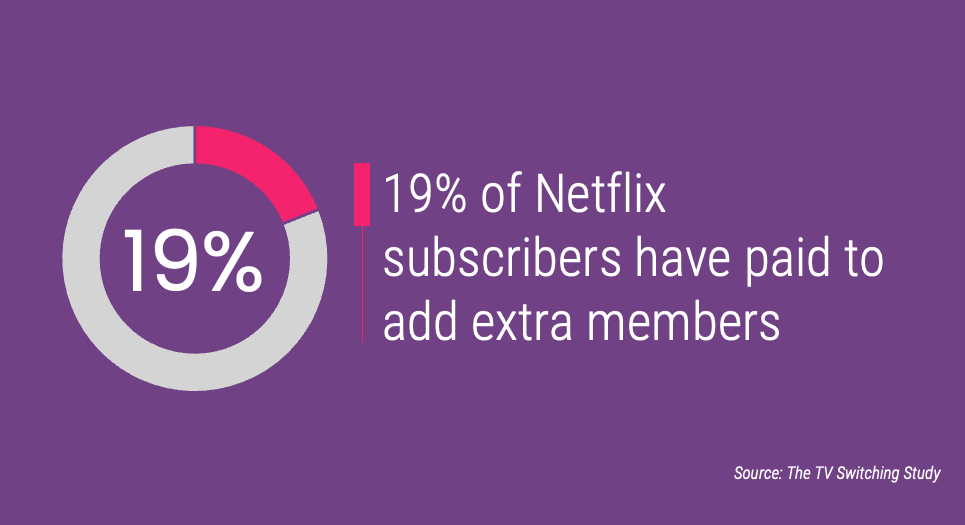
Netflix is advancing its ongoing effort to curb password sharing by testing enhanced multi-factor authentication (MFA) protocols for account access. The approach builds on the company’s widely publicized crackdown launched in 2023, introducing additional verification layers to confirm authorized household usage. Rather than relying solely on IP tracking and device recognition, MFA introduces real-time authentication steps such as one-time passcodes to deter unauthorized sharing across locations. This development reflects Netflix’s continued refinement of monetization strategies following the success of its “paid sharing” model, which converted millions of freeloaders into paying subscribers. More broadly, it signals a maturation of the subscription streaming market, where revenue optimization and account integrity are becoming as critical as subscriber growth and content investment.
The Circana Take:
- Netflix’s move furthers its structural shift to depend as much on tightening monetization mechanics as on acquiring new subscribers, particularly in mature markets. While effective in limiting abuse, additional authentication layers introduce friction that must be carefully managed to avoid undermining user satisfaction and increasing churn risk.
- As Netflix sets the standard, competitors will face mounting pressure to implement similar authentication safeguards, normalizing stricter account controls across the streaming ecosystem.