
Distrust That Particular Machine focused on the AI Luddites, the 35% of consumers who avoid AI for a variety of reasons. A colleague wanted to send the blog to their client but chose instead to send an AI-generated summary. In fairness to my colleague, the blog was 900 words, but as a writer, that approach pains me. As a technologist though, I completely understand: TL;DR at its finest. But what concerns me about the approach is that we begin to lose the art, and enjoyment, of simply reading. Everything becomes one giant Cliff Notes study guide. Must every thought become an isolated bullet point to be instantly ingested, without the nuances of the surrounding words?
Perhaps so, as our research shows that a quarter of consumers who have embraced AI use it to summarize written content; a number that increases to 30% of AI users between the ages of 25 and 45. We are, after all, a nation that supposedly strives for efficiency and, more to the point, the working sector is often under pressure to produce more output (whatever that may be) with fewer resources. Taking time to read long articles may be viewed as a luxury that people do not have time for.
Efficiency is certainly seen as a key benefit of AI. My daughter was recently apartment hunting in New York and used AI to determine the ideal location based on factors such as her distinct commutes to college and her internship while balancing affordability and security concerns. The answer came in seconds, rather than scouring Google Maps for various possible locations. That is shopping, of a sort. More mainstream shopping is certainly seeing a significant impact from AI with 31% (spiking to 37% in the 55+ age group) of AI users running their shopping requirements through AI to find the best deal. This means that stores need to consider not only the usual search result indices, but also how the many AI agents may discover – or not! – their products. It also means that consumers have further surrendered their own ability to select the ideal product, asking AI to fine-tune the list of product applicants first. Efficient? Yes. Disruptive to retail? Absolutely. Ideal outcome for all concerned? Perhaps…
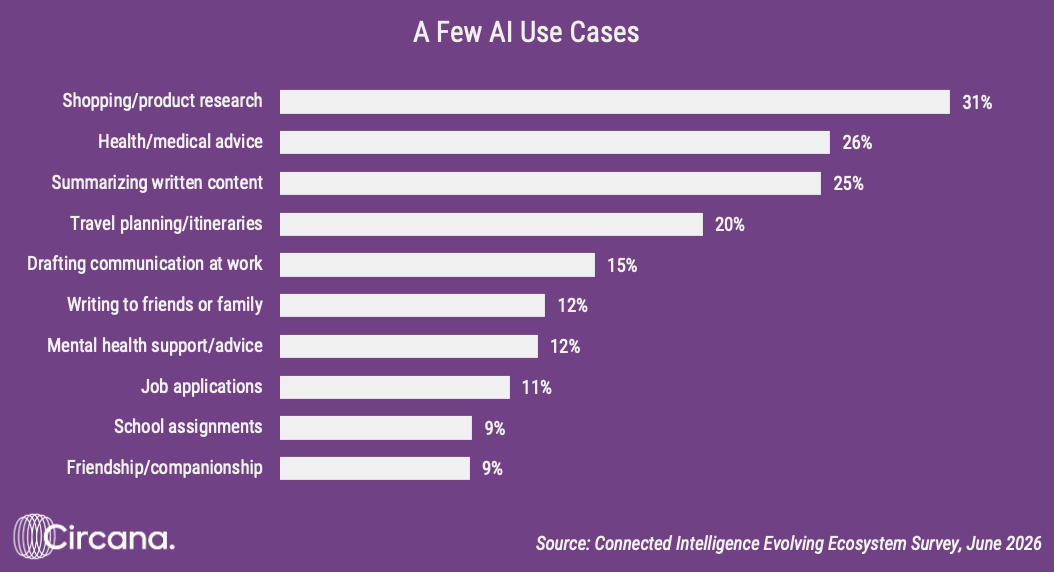
Where AI use gets weird, at least to my mind, is with personal communication. 12% of AI users ask it to draft their communications to their friends and family. So we no longer ingest written prose; nor do we write it, apparently. Of course, one could argue that trend began with the mass-adoption of text messaging: we become a nation of short terse messages, rather than the flowing prose of our ancestors’ handwritten letters. But asking AI to write the communication in the first place is definitely “next level”. At this rate, we are heading to a future world where the robots act as the go-between on both sides of our communication: they write it for us, and the recipient’s AI then summarizes the AI-written missive.
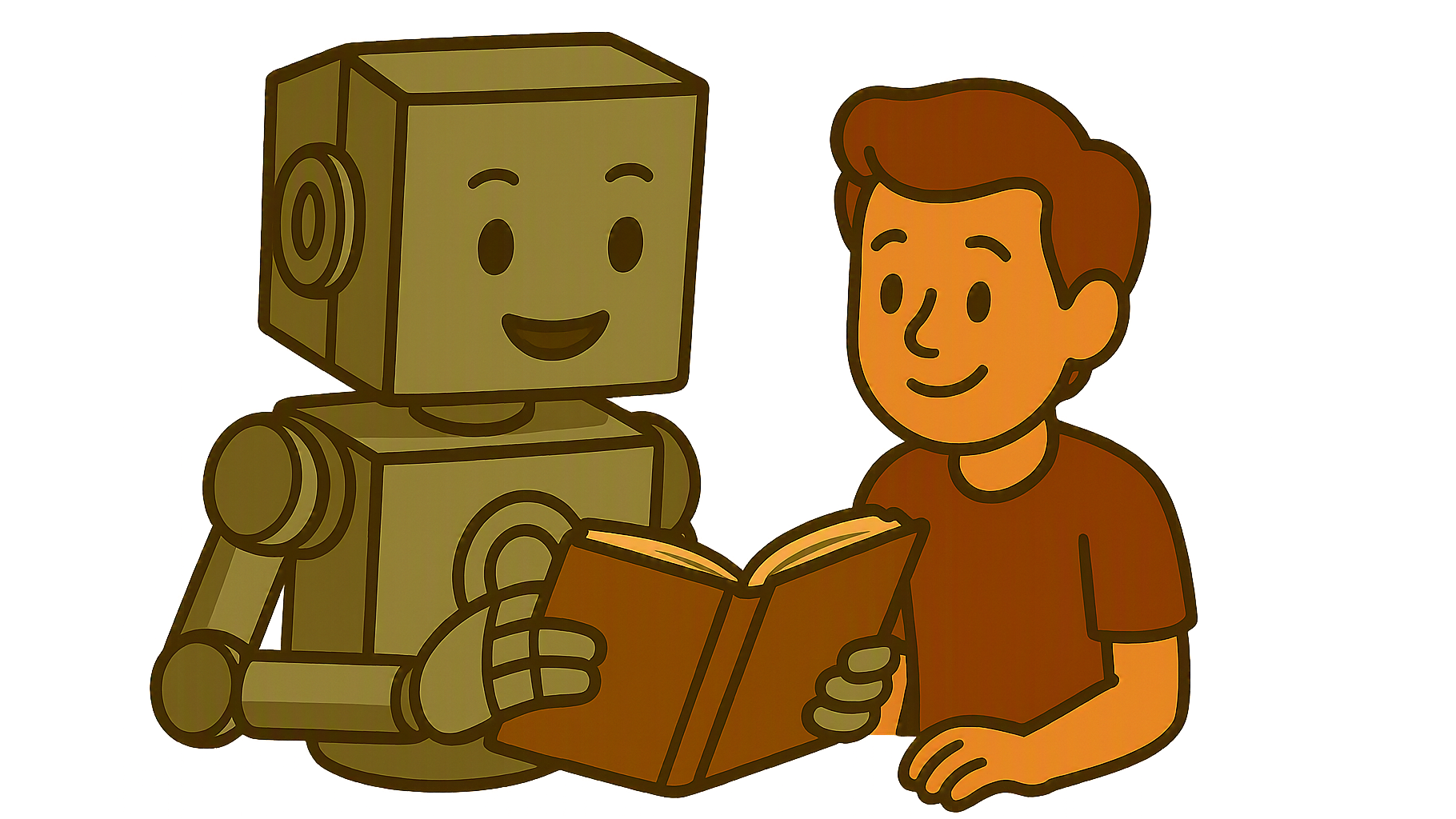
Still, it could all be even stranger…9% of AI consumers lean on their AI “tool” for friendship and companionship. Among 25- to 35-year-olds that increases to 13%. I’m not sure what that says about the future of society, but if the trend continues, I suspect there will be more interest in VR and other “individual” entertainment devices. Heck, perhaps we will even resort to reading the occasional book with our AI companions.
All the AI stats quoted in this blog are sourced from the Connected Intelligence Evolving Ecosystem report which will be available in late July 2026.